New Mexico Plans Casino Jackpot Data Sharing to Audit SNAP Recipients Winning $4,500 or More
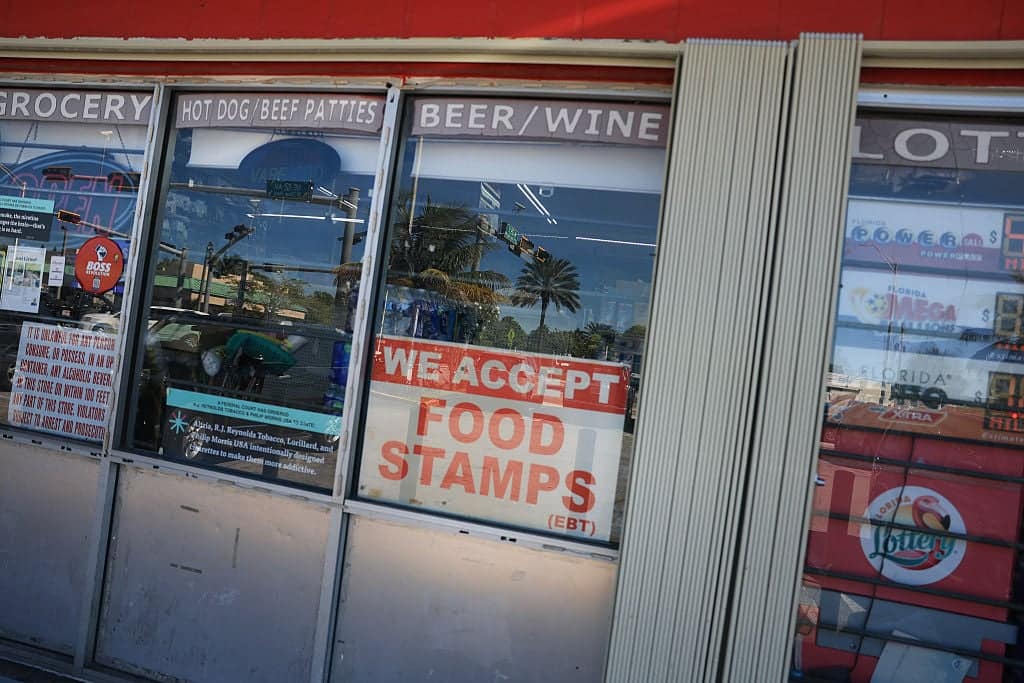
New Mexico is preparing to cross-reference casino jackpot records with SNAP benefit rolls, targeting wins of $4,500 or more at state-licensed gambling venues. The move is a direct response to the state’s 16% SNAP error rate and the looming threat of $173 million in federal penalties from the USDA. Roughly 434,000 New Mexicans, about 20% of the state’s total population, currently receive SNAP benefits.
New Mexico’s $4,500 Jackpot Threshold: How the Reporting System Works
Why $4,500 Is the Magic Number
The $4,500 figure is not arbitrary. The USDA’s Food and Nutrition Service, the federal agency that administers the Supplemental Nutrition Assistance Program, defines gambling winnings at or above $4,500 as “substantial” under federal SNAP eligibility rules. A single win at that level can push a recipient’s countable income or assets above the program’s limits, making them immediately ineligible for benefits. New Mexico’s proposed data-sharing system is designed to catch exactly those cases before the next benefit cycle issues a payment the recipient no longer qualifies to receive [1].
Under the planned system, state-licensed casinos would transmit jackpot data to the New Mexico Human Services Department whenever a player’s win hits the $4,500 mark. Health officials would then cross-check that data against the state’s active SNAP caseload. If a match appears, the recipient’s case gets flagged for a formal eligibility review. The review does not automatically cut benefits; it initiates a process where the recipient must verify their current financial situation.
The mechanics align closely with how casinos already report large wins to the IRS. Federal law requires casinos to issue a W-2G tax form for slot machine jackpots of $1,200 or more. The infrastructure for tracking and reporting large payouts already exists at every licensed casino in the country. New Mexico’s proposal essentially adds a second reporting channel, routing jackpot data to state welfare administrators alongside the existing federal tax reporting pipeline.
The Tribal Casino Carve-Out Creates a Significant Gap
New Mexico’s 24 tribal casinos sit entirely outside the scope of this policy. Tribal gaming operations run under the Indian Gaming Regulatory Act of 1988, which grants federally recognized tribes the authority to operate casinos on sovereign land without state regulatory oversight. Because the state cannot compel tribal casinos to share patron data, any SNAP recipient who wins a $4,500 jackpot at a tribal property faces no automatic review under the new system [1].
This is a substantial carve-out. Tribal casinos represent a major share of New Mexico’s gaming market. The state’s 24 tribal operations include large destination properties run by the Pueblo of Sandia, the Navajo Nation, and other sovereign nations. A policy designed to reduce SNAP errors through casino data sharing will have a structural blind spot covering a significant portion of the state’s total gambling activity.
The sovereignty issue is not unique to New Mexico. Every state that has explored casino-to-welfare data sharing has encountered the same legal wall. Tribal nations are not obligated to participate, and no federal mandate currently requires them to share jackpot data with state human services agencies. That gap means the policy’s effectiveness will be limited to state-licensed commercial venues from day one.
A 16% Error Rate and $173 Million in Federal Penalties Are Driving This Decision
The Federal Penalty Framework Explained
New Mexico’s SNAP error rate currently sits at 16%, meaning roughly 1 in 6 benefit transactions involves some form of payment error, either an overpayment or an underpayment. The USDA sets a national tolerance threshold for state SNAP error rates. States that exceed that threshold face financial liability in the form of mandatory repayments to the federal government. For New Mexico, the exposure from its current error rate totals approximately $173 million in potential federal penalties [1].
The USDA’s Food and Nutrition Service calculates state error rates through a statistical sampling process called the SNAP Quality Control system. Each year, federal reviewers audit a random sample of active SNAP cases in every state. Cases where benefits were issued to ineligible recipients, or where the benefit amount was calculated incorrectly, count against the state’s error rate. States with rates above the national average for two consecutive years enter a liability period where penalty repayments become mandatory.
A $173 million penalty would represent a severe fiscal hit for New Mexico, a state that consistently ranks among the poorest in the country. New Mexico’s median household income sits well below the national average, and the state relies heavily on federal transfer payments to support its population. Losing $173 million in federal funds, or being required to repay that amount, would force cuts elsewhere in the state budget. The casino jackpot data-sharing proposal is, at its core, a fiscal risk management strategy as much as it is a fraud prevention measure.
What Counts as a SNAP Error Under Federal Rules
Not every SNAP error involves fraud. Many overpayments result from recipients failing to report income changes on time, administrative processing delays, or caseworker mistakes during eligibility determinations. Gambling winnings fall into a specific category: unreported lump-sum income. Under USDA rules, a large gambling win counts as income in the month it is received. If that income pushes a household above the gross income limit for SNAP, the household loses eligibility for that month and potentially beyond, depending on the size of the win and the household’s ongoing financial situation.
The challenge for state administrators is that gambling wins are largely invisible to them unless the recipient self-reports. Most recipients do not self-report a casino jackpot to their SNAP caseworker, either because they do not know they are required to or because they choose not to. The data-sharing system New Mexico is building would eliminate that reporting gap for state-licensed casino wins above $4,500, automating a disclosure that currently depends entirely on voluntary compliance.
How States Handle SNAP Gambling Income in 2026
New Mexico is not the first state to grapple with this issue, but its formal data-sharing proposal puts it ahead of most. The table below shows how several states currently approach the intersection of SNAP eligibility and gambling winnings.
| State | Approach to Gambling Winnings | Data Sharing with Casinos |
|---|---|---|
| New Mexico | $4,500+ wins trigger eligibility review | Planned (state-licensed only) |
| Michigan | Gambling income counted as monthly income | No formal system |
| Nevada | Follows federal USDA income rules | No formal system |
| Louisiana | Gambling wins treated as unearned income | No formal system |
| Missouri | Lump-sum wins assessed in month received | No formal system |
The federal USDA rule requiring states to count gambling winnings as income has existed for years, but enforcement has been inconsistent because the data infrastructure to detect unreported wins simply did not exist at the state level. New Mexico’s proposal represents one of the first concrete attempts to build that infrastructure through a formal inter-agency data pipeline rather than relying on self-reporting or random audits [1].
States with large commercial casino sectors, including Nevada, New Jersey, and Michigan, have faced similar policy questions but have not moved to implement automated jackpot reporting to welfare agencies. The political sensitivity of targeting casino patrons who receive public benefits has slowed action in many states. New Mexico’s fiscal pressure from the $173 million penalty exposure appears to be the catalyst that is pushing the state to act where others have hesitated.
Privacy advocates have raised concerns about the data-sharing model in several states. The core objection is that casino patron data, including the identity of jackpot winners, is sensitive personal financial information. Routing that data to government welfare agencies creates a surveillance mechanism that some civil liberties groups argue goes beyond what is necessary to administer a food assistance program. New Mexico has not yet published the specific data governance rules that would govern how jackpot records are stored, accessed, and eventually deleted by the Human Services Department.
[PLACEHOLDER: IMAGE_2]
What This Means for Casino Players on SNAP Benefits
The Practical Reality for Affected Players
For the approximately 434,000 New Mexicans currently receiving SNAP benefits, the new system introduces a concrete consequence to hitting a large jackpot at a state-licensed casino. A win of $4,500 or more will no longer be a private financial event. It will automatically generate a notification to state health officials, who will initiate a review of the winner’s benefit eligibility [1].
The review process matters. A single jackpot win does not necessarily mean permanent loss of SNAP benefits. Under USDA rules, gambling winnings count as income in the month they are received. If the win pushes a household’s monthly income above the gross income limit for SNAP, that household loses eligibility for that month. In subsequent months, if the household’s income returns to qualifying levels, they can reapply. The practical disruption, however, can be significant: a gap in benefits, a reapplication process, and potential repayment demands for any benefits received during a period of ineligibility.
For gaming industry operators at state-licensed venues, the policy adds a new compliance dimension. Casinos will need to establish data-sharing protocols with the New Mexico Human Services Department, ensure their jackpot tracking systems can generate the required reports, and train staff on the new reporting obligations. The operational burden is relatively modest given that the W-2G reporting infrastructure already handles similar data flows to the IRS, but the legal and privacy frameworks governing state welfare data sharing differ from federal tax reporting rules and will require separate compliance work.
The Broader Debate: Welfare Integrity vs. Player Privacy
The New Mexico proposal sits at the intersection of two legitimate policy interests that pull in opposite directions. On one side, the USDA and state welfare administrators have a clear mandate to ensure that SNAP benefits reach only eligible recipients. A 16% error rate is not a minor administrative inconvenience; it represents hundreds of millions of dollars in misallocated federal funds and creates real political and fiscal risk for the state. Automated data sharing is a logical tool for closing a known gap in the eligibility verification system.
On the other side, casino patrons, including those who receive SNAP benefits, have a reasonable expectation that their gambling activity is not automatically reported to government agencies beyond the existing IRS tax reporting requirements. The expansion of government data sharing into casino patron records sets a precedent that could extend to other types of financial activity in the future. The tribal casino carve-out also creates an uneven system where the same jackpot win carries different consequences depending on which casino building you are sitting in when the reels stop spinning.
Key Takeaways
- New Mexico plans to alert the Human Services Department whenever a SNAP recipient wins $4,500 or more at a state-licensed casino, matching the USDA’s federal threshold for substantial gambling winnings.
- The state’s current SNAP error rate of 16% exposes New Mexico to approximately $173 million in federal penalties from the USDA’s Food and Nutrition Service.
- Approximately 434,000 New Mexicans, representing 20% of the state’s total population, currently receive SNAP benefits and could be affected by the new reporting system.
- New Mexico’s 24 tribal casinos are exempt from the data-sharing requirement because they operate on sovereign land under the Indian Gaming Regulatory Act of 1988.
- A jackpot win above $4,500 triggers an eligibility review, not an automatic benefit termination; recipients must verify their current financial situation before any action is taken.
- Federal law already requires casinos to issue W-2G tax forms for slot machine wins of $1,200 or more, meaning the jackpot tracking infrastructure for this policy already exists at licensed venues.
- No other U.S. state currently operates a formal automated data-sharing system between casinos and state welfare agencies, making New Mexico’s proposal a potential national model.
Frequently Asked Questions
What happens to my SNAP benefits if I win $4,500 at a New Mexico casino?
Under the proposed system, your jackpot win will be reported to the New Mexico Human Services Department, which will initiate an eligibility review of your SNAP case. If the win pushes your household income above the SNAP gross income limit for that month, you may lose eligibility for that benefit period. You will not automatically lose benefits permanently; the review determines your ongoing eligibility based on your full financial picture [1].
Does the $4,500 SNAP gambling rule apply to tribal casinos in New Mexico?
No. New Mexico’s 24 tribal casinos operate on sovereign land under the Indian Gaming Regulatory Act of 1988 and are not subject to state data-sharing requirements. A SNAP recipient who wins $4,500 or more at a tribal casino will not have that win automatically reported to state health officials under the proposed system [1].
How does the USDA define substantial gambling winnings for SNAP purposes?
The USDA’s Food and Nutrition Service defines gambling winnings of $4,500 or more as substantial under federal SNAP eligibility rules. Winnings at or above this threshold count as income in the month they are received and can push a household above the program’s gross income limits, resulting in loss of eligibility for that month.
Is New Mexico the only state reporting casino jackpots to welfare agencies?
New Mexico’s formal data-sharing proposal is among the first of its kind in the United States. States including Michigan, Nevada, Louisiana, and Missouri follow federal USDA rules requiring gambling income to be counted for SNAP purposes, but none currently operate an automated casino-to-welfare-agency reporting pipeline comparable to what New Mexico is building.
What is New Mexico’s SNAP error rate and why does it matter?
New Mexico’s SNAP error rate is currently 16%, meaning roughly 1 in 6 benefit transactions involves a payment error. The USDA’s Food and Nutrition Service uses a Quality Control sampling system to calculate state error rates, and states that exceed the national tolerance threshold face mandatory financial penalties. New Mexico’s current exposure totals approximately $173 million in potential federal repayments [1].
The Bottom Line
New Mexico’s casino jackpot data-sharing plan is a pragmatic response to a genuine fiscal crisis. A 16% SNAP error rate and $173 million in potential federal penalties give state administrators a powerful incentive to close every verification gap they can find, and unreported gambling winnings represent exactly the kind of gap that automated data sharing can address efficiently. The policy is narrow in scope, targeting only state-licensed casinos and only wins above the USDA’s own $4,500 threshold, which limits both its reach and its legal exposure.
The tribal casino exemption is the policy’s most significant structural weakness. With 24 tribal operations covering a substantial share of New Mexico’s gaming market, the system will have a built-in blind spot from day one. Whether that gap undermines the policy’s effectiveness enough to matter for the state’s error rate calculation remains to be seen. The USDA will ultimately judge New Mexico’s error rate on outcomes, not intentions.
For casino players on SNAP benefits, the message is clear: a big win at a state-licensed venue now comes with a government notification attached. The slot machine pays out, and the state pays attention. That reality will reshape how some of New Mexico’s 434,000 SNAP recipients think about their next trip to a commercial casino, and it may signal a broader shift in how states use existing casino data infrastructure to enforce welfare eligibility rules across the country.
Stay Ahead of Casino Policy and Gaming News
18+ | Play Responsibly | T&Cs Apply
Sources
- Casino.org – New Mexico plans to share casino jackpot data with health officials to audit SNAP recipients winning $4,500 or more at state-licensed venues.
