
Bally’s Vegas Expansion and a Potential NBA Franchise
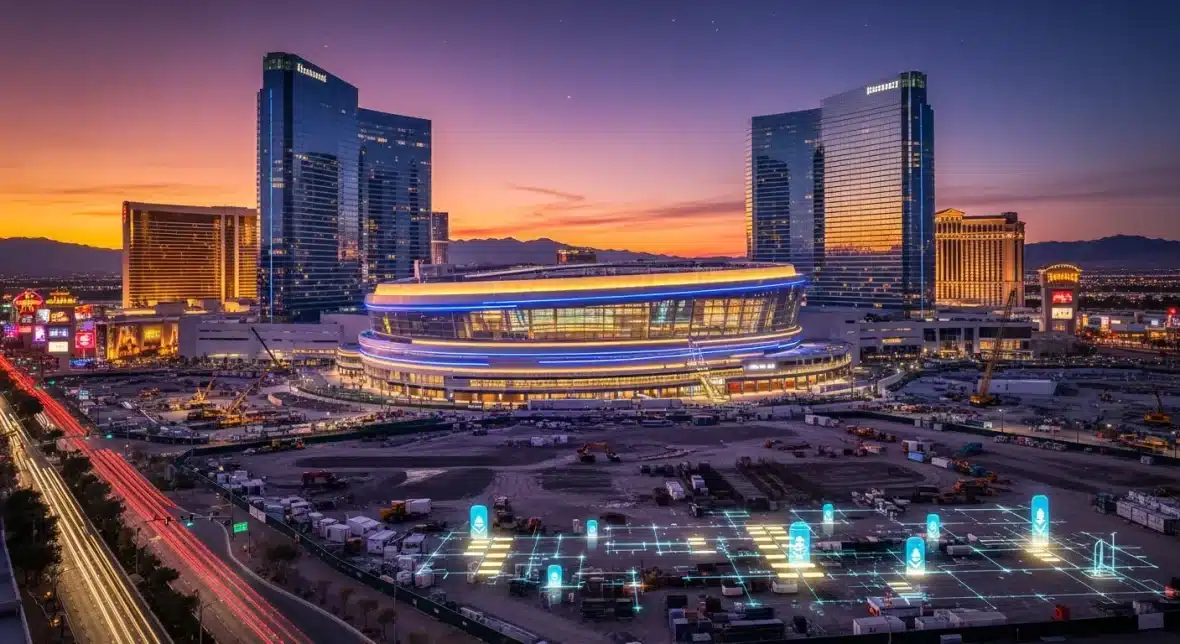
Las Vegas has never been shy about thinking big. But what Bally’s Corporation is planning for the Strip might be the most audacious bet the city has seen in decades, and it’s not just a casino. Word has been circulating for months about a possible NBA franchise tying itself to the development, and if that comes together the way insiders suggest it might, this becomes one of the most consequential real estate and sports infrastructure plays in the country. For crypto investors and finance-minded readers, the story gets even more interesting, because blockchain-based investment structures are being floated as part of how this whole thing gets funded. If you’re tracking where institutional money, sports capital, and digital assets are starting to converge, this is a project worth paying close attention to.
Key Takeaways
- Bally’s Vegas expansion plans involve a $6–$7 billion integrated resort on the former Tropicana site, targeting a 2028 opening to align with the LA Olympics — making it one of the largest single-site developments in Nevada’s history.
- The project includes a purpose-built arena that could anchor an NBA franchise, with Las Vegas considered a frontrunner for one of two expected league expansion slots carrying a $4–$5 billion entry fee.
- A confirmed NBA tenant would dramatically accelerate financing, potentially generating $300–$500 million in annual arena revenues and creating a self-reinforcing economic ecosystem between the casino and the sports franchise.
- Bally’s Vegas expansion plans are exploring blockchain-based tokenized real estate structures that could open investment access to accredited investors beyond traditional private equity — though SEC regulatory risk remains a significant hurdle.
- Crypto tokens tied to gaming and sports infrastructure tend to spike around major milestone announcements, making early, research-backed positioning in credible projects a key strategy ahead of confirmed NBA and construction news.
- Las Vegas’s crypto-friendly regulatory environment and no state income tax make it uniquely positioned to pioneer blockchain-financed large-scale real estate, potentially setting a precedent for how major American developments get capitalized in the future.
What Bally’s Is Building on the Las Vegas Strip
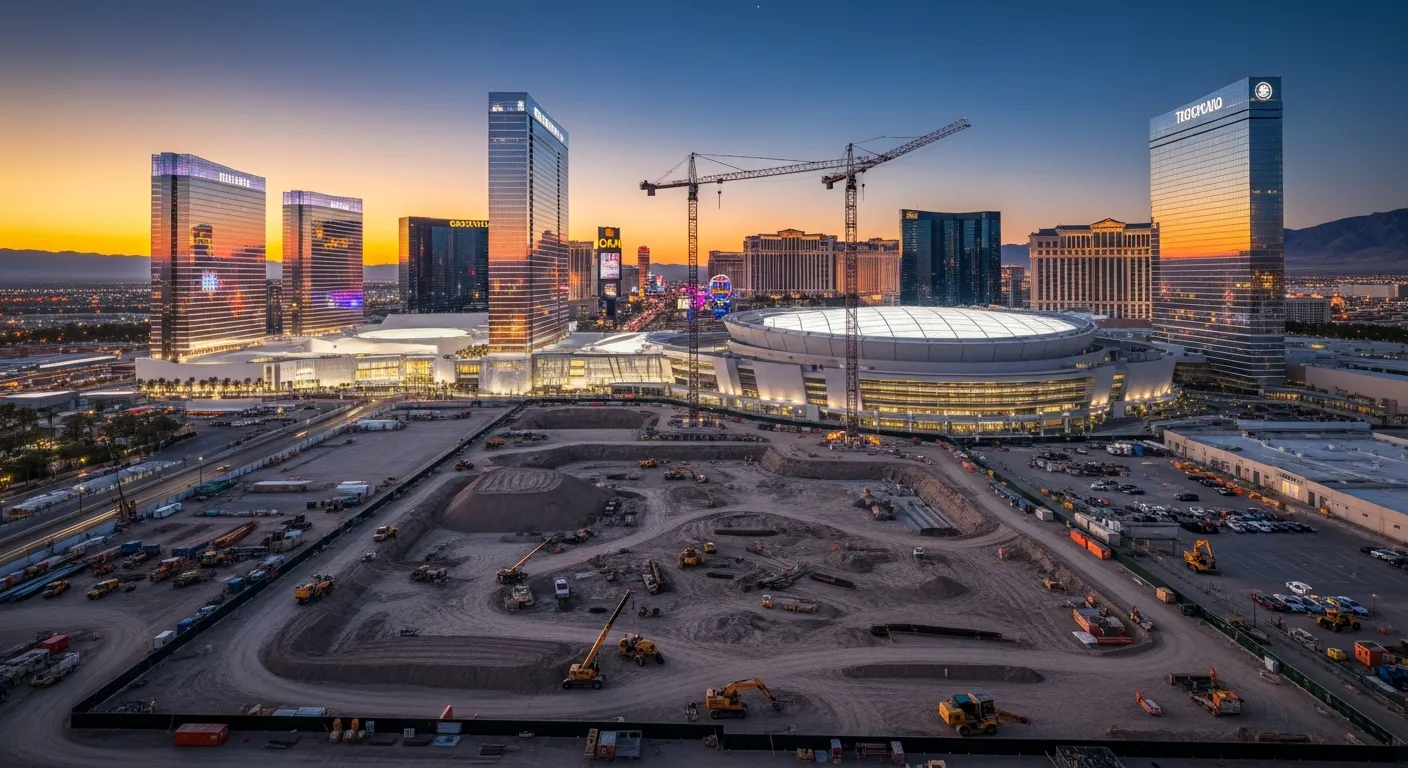
Bally’s Corporation has been quietly accumulating influence in Las Vegas for years, but the company’s plans for a full-scale integrated resort on the Strip represent a decisive shift from quiet operator to major developer. The project sits on the former Tropicana Las Vegas site, a piece of land that carries decades of Vegas history, and Bally’s intends to turn it into something that looks nothing like what came before it.
Scale and Scope of the Proposed Development
The development as currently conceived would include a casino floor, hotel towers, entertainment venues, and, most significantly, a purpose-built arena capable of hosting a major professional sports franchise. The total project has been valued at roughly $6 to $7 billion, making it one of the largest single-site development proposals in Nevada’s history. That’s not just large by Las Vegas standards. That’s large by any standard.
Bally’s owns and operates properties across more than a dozen states, and the company has positioned itself in recent years as a sports-adjacent brand, acquiring sports betting licenses, media rights partnerships, and digital gaming platforms. The Las Vegas project is where all of those threads are meant to come together. A fully integrated resort with a sports arena at its center isn’t just a hospitality play, it’s a long-term rights-and-revenue machine.
The proposed footprint covers roughly 35 acres. For context, the MGM Grand, one of the largest hotels in the world, sits on about 100 acres total. Bally’s is working with a more constrained footprint but is planning vertically and densely, with hotel capacity expected to reach 3,000 rooms or more across multiple towers.
Timeline and Current Construction Status
The Tropicana closed its doors in April 2024, with demolition following over subsequent months. As of early 2026, site preparation work is ongoing, though full construction on the resort itself has not yet broken ground. That’s partly a reflection of the financing complexity involved, a project of this size requires layered capital structures, regulatory approvals, and in this case, a potential sports franchise deal that has yet to be formally announced.
Bally’s has indicated publicly that it is targeting a 2028 opening timeline, which aligns, not coincidentally, with the 2028 Summer Olympics in Los Angeles. Vegas will serve as a host city for several Olympic events, and that creates a powerful commercial incentive to have a premier destination property ready by that date. Whether the timeline holds depends heavily on how quickly the financing closes and whether the NBA partnership materializes in a concrete way.
The NBA Connection: What We Know So Far
The NBA has been signaling for years that Las Vegas is a serious candidate for expansion. The league already uses the city for its Summer League, and Nevada’s sports infrastructure has grown substantially with the arrival of the Raiders and the Golden Knights. A basketball franchise would complete that picture, and Bally’s new arena, if built to spec, would be the most obvious home for it.
Which Franchise Could Call the New Arena Home
No formal expansion announcement has been made by the NBA as of early 2026, but the league is widely expected to add two new franchises, with Las Vegas and Seattle considered the frontrunners. The NBA’s Board of Governors has discussed expansion fees in the range of $4 to $5 billion per team, a figure that itself tells you how much the league values a Las Vegas market entry.
For Bally’s, having an NBA anchor tenant wouldn’t just fill seats. It would transform the entire commercial profile of the development. Arena naming rights, media broadcast exposure, merchandise, food and beverage operations, and the year-round traffic that comes with an 82-game regular season schedule, the economic multiplier is significant. You’d essentially be looking at a self-reinforcing ecosystem where the casino feeds the arena and the arena feeds the casino.
How an NBA Deal Would Shape the Project
An NBA commitment would likely accelerate the financing timeline considerably. Institutional lenders and equity investors are far more comfortable underwriting a mixed-use development when there’s a proven anchor tenant with guaranteed revenue streams. An NBA franchise operating out of a Bally’s-controlled arena would generate estimated annual revenues in the range of $300 to $500 million from arena operations alone, depending on the deal structure.
Beyond the economics, an NBA tie-in changes the regulatory conversation in Nevada. State legislators and the Nevada Gaming Control Board are generally supportive of development that brings sustained economic activity rather than one-time construction jobs. A professional sports team anchored to a gaming resort is exactly the kind of long-duration economic case that tends to move approval processes forward. If the franchise deal closes, expect the rest of the project’s approvals to follow in relatively short order.
Financing the Mega-Project: Where Crypto Fits In
Here is where the story gets particularly relevant if you follow digital assets. Bally’s has publicly explored non-traditional financing mechanisms for parts of this project, and blockchain-based capital structures have come up in those discussions in ways that are worth taking seriously, not as a novelty, but as a structural choice.
Tokenized Real Estate and Blockchain-Based Investment Vehicles
Tokenized real estate, where ownership interests in a physical property are represented as digital tokens on a blockchain, has moved well past the proof-of-concept phase. Platforms like RealT and several institutional-grade operators have demonstrated that this model works for smaller properties. The question was always whether it could scale to something like a $6 billion resort development. Several reports from 2025 indicated that Bally’s was in discussions with blockchain infrastructure providers about issuing tokenized securities tied to portions of the Las Vegas development, potentially allowing a broader pool of accredited investors to take positions in what would otherwise be an exclusive institutional deal.
This matters for you as an investor because it would create a more accessible entry point to what is fundamentally a large-cap real estate and entertainment asset. Rather than needing a seat at a private equity table, a tokenized structure, if it clears SEC scrutiny, which is a real if, would let you hold a fraction of the underlying asset with the liquidity benefits that come with on-chain transferability.
Crypto Market Tokens Tied to Gaming and Sports Ventures
Separately from the real estate tokenization angle, the intersection of crypto and sports-gaming infrastructure has produced its own category of investment tokens. Several blockchain projects have issued tokens tied to sports venue revenues, gaming platform equity, or fan engagement ecosystems. The volatility in this category is high, but so is the directional correlation with major sports announcements, the kind that a confirmed NBA-to-Las Vegas move would almost certainly trigger.
For real-time tracking of tokens operating in the gaming and sports verticals, Cryptsy provides up-to-date market data and asset analysis that can help you identify which projects are structurally connected to these developments versus which ones are riding sentiment. Understanding that distinction is important before you put capital to work.
Risks and Opportunities for Crypto Investors
Let’s be direct about the risk picture, because it’s real. This project, as compelling as the thesis is, is still in a pre-construction phase with no confirmed NBA tenant. The financing structure, including any blockchain components, has not been publicly formalized. You are, at this stage, investing in narrative as much as in fundamentals, and narrative-driven positions can unwind fast if a key announcement doesn’t materialize.
The tokenized real estate angle is particularly subject to regulatory risk. The SEC has taken an increasingly assertive posture toward digital securities since 2024, and any token that represents a fractional interest in a real estate project is squarely in securities territory. If Bally’s pursues this path, the compliance overhead is substantial, and delays are likely. That’s not a reason to dismiss the opportunity, but it is a reason to size your position accordingly and not treat a preliminary discussion as a done deal.
On the opportunity side, the asymmetry is interesting. If the NBA expansion is confirmed, if Bally’s breaks ground on schedule, and if the tokenized investment vehicle passes regulatory review, you’d be looking at one of the first large-scale proof points for blockchain-based real estate investment in a major U.S. entertainment asset. The market re-rating that would follow for related tokens and platforms could be substantial. Early positioning in credible projects within this ecosystem, taken with appropriate risk management, could yield returns that are difficult to replicate through traditional real estate exposure.
Sporting venue and gaming-adjacent crypto tokens also tend to benefit from what you might call the announcement cycle. Each confirmed milestone, a franchise awarded, a construction contract signed, a financing round closed, generates a fresh wave of retail and institutional attention. If you track those milestones and understand the tokenomics of the relevant projects, you can position ahead of the crowd rather than chasing moves after they’ve already happened.
Broader Impact on the Las Vegas Crypto and Sports Economy
Las Vegas is already one of the more crypto-friendly jurisdictions in the United States. Nevada has no state income tax, a relatively permissive regulatory environment for financial services, and a local government that has been openly courting tech and fintech companies for years. The arrival of a major crypto-integrated real estate project on the Strip would reinforce that positioning considerably.
For the city’s economy more broadly, the combination of a world-class resort, an NBA franchise, and a blockchain-based investment structure would represent a convergence that no other U.S. city has yet pulled off at scale. That kind of first-mover positioning tends to attract follow-on capital. If Bally’s makes this work, expect other Strip developers to explore similar financing structures. You’d be watching the beginning of a shift in how large-scale American real estate gets capitalized, not just a one-off project.
From a sports economy standpoint, the NBA’s presence would also amplify Las Vegas’s existing sports betting infrastructure in ways that go beyond what the NFL and NHL have done. Basketball has one of the highest betting handle rates of any professional sport, and a home team in the market would deepen local engagement with sports wagering in ways that benefit not just Bally’s, but the entire ecosystem of licensed operators in Nevada.
For investors who think about macro positioning, where capital is flowing, which cities are becoming financial and entertainment hubs, which asset classes are converging, Las Vegas in 2026 looks like a market in structural ascent. The Bally’s project, NBA connection, and crypto financing angle are all symptoms of the same underlying dynamic: serious money is taking the intersection of sports, entertainment, and digital finance very seriously right now.
Conclusion
The Bally’s Las Vegas development is not a story you want to follow casually. The scale of the project, the potential NBA anchor, and the blockchain financing threads each carry significant implications on their own. Together, they represent a convergence point that serious investors in real estate, sports capital, and digital assets should be watching closely.
What you should actually be doing right now is building your information infrastructure before the formal announcements start arriving. That means knowing which tokens are legitimately tied to gaming and sports infrastructure, understanding the regulatory environment for digital securities in 2026, and having a clear-eyed view of the timeline risks involved. None of this requires guesswork, it requires discipline and reliable data.
Platforms like Cryptsy exist precisely for moments like this: when a complex, multi-layered story intersects with crypto markets and you need analysis that cuts through the noise rather than adding to it. The opportunity here is real. Whether you’re positioned to act on it when the key announcements land is entirely up to the work you put in before that moment arrives.
Frequently Asked Questions
What is Bally’s Vegas expansion plan and where will it be built?
Bally’s Corporation is developing a $6–7 billion integrated resort on the former Tropicana Las Vegas site on the Strip. The 35-acre project will include a casino, hotel towers with 3,000+ rooms, entertainment venues, and a purpose-built sports arena, making it one of the largest single-site developments in Nevada’s history.
Is an NBA franchise really coming to Las Vegas as part of the Bally’s development?
No formal NBA expansion announcement has been made as of early 2026, but Las Vegas and Seattle are considered the frontrunners for two new franchises. Bally’s new arena is seen as the most likely home for a Las Vegas team, with NBA expansion fees estimated at $4–5 billion per team.
How does crypto and blockchain financing factor into the Bally’s Las Vegas project?
Bally’s has explored tokenized real estate structures, where fractional ownership interests in the development are represented as digital tokens on a blockchain. This could open investment access to accredited investors beyond traditional private equity, though SEC regulatory approval remains a significant hurdle.
What are the biggest risks for crypto investors following the Bally’s Vegas expansion?
Key risks include the project still being in pre-construction with no confirmed NBA tenant, unformalized blockchain financing structures, and heightened SEC scrutiny over digital securities. Investors should treat current positioning as narrative-driven and size exposure carefully until formal announcements materialize.
When is the Bally’s Las Vegas resort expected to open?
Bally’s is targeting a 2028 opening, strategically aligned with the 2028 Los Angeles Summer Olympics, during which Las Vegas will host several events. The timeline depends on financing closure, regulatory approvals, and whether the potential NBA franchise deal is formally confirmed.
How would an NBA team in Las Vegas impact the local sports betting economy?
Basketball carries one of the highest betting handle rates among professional sports. A Las Vegas NBA franchise would significantly deepen local sports wagering engagement, benefiting Bally’s and Nevada’s broader ecosystem of licensed operators well beyond the impact already seen from the NFL Raiders and NHL Golden Knights.
