GRT Price Prediction: 2026, 2027 & 2030 Outlook

The crypto market has a way of humbling even the most experienced investors, but it also rewards those who pay attention to infrastructure rather than just hype. As we settle into January 2026, the noise around meme coins and fleeting trends has quieted somewhat, leaving room for a serious discussion about utility. This brings us to The Graph (GRT). You might know it as the “Google for Blockchains,” a comparison that has stuck because it is accurate. Without this protocol, the decentralized web is essentially a library with all the books thrown on the floor, unsearchable and chaotic.
In my years analyzing crypto assets, I have found that long-term value accrues to protocols that solve boring, critical problems. The Graph solves the data indexing problem. If you are holding GRT or considering an entry this year, you are betting on the growth of Ethereum, Layer 2 networks, and the broader Web3 ecosystem. This article looks at where the price of GRT could head in 2026, 2027, and as far out as 2030, basing these projections not on wishful thinking but on market structure, historical data, and fundamental network usage.
Key Takeaways
- The Graph serves as essential Web3 infrastructure, acting as the “Google for Blockchains” by enabling critical data querying for decentralized applications.
- A bullish grt price prediction for 2026 targets the one-dollar mark, driven by Ethereum ecosystem expansion and increased Layer 2 usage.
- Long-term forecasts for 2030 estimate a trading range between two and four dollars, with aggressive scenarios reaching seven dollars based on AI integration.
- Investors should track query fee volume as the primary indicator of organic demand and network health rather than relying solely on speculative hype.
- Future value accrual depends on the token’s deflationary mechanisms successfully outpacing inflation through sustained network utilization.
Understanding The Graph’s Utility in Web3 Data Infrastructure
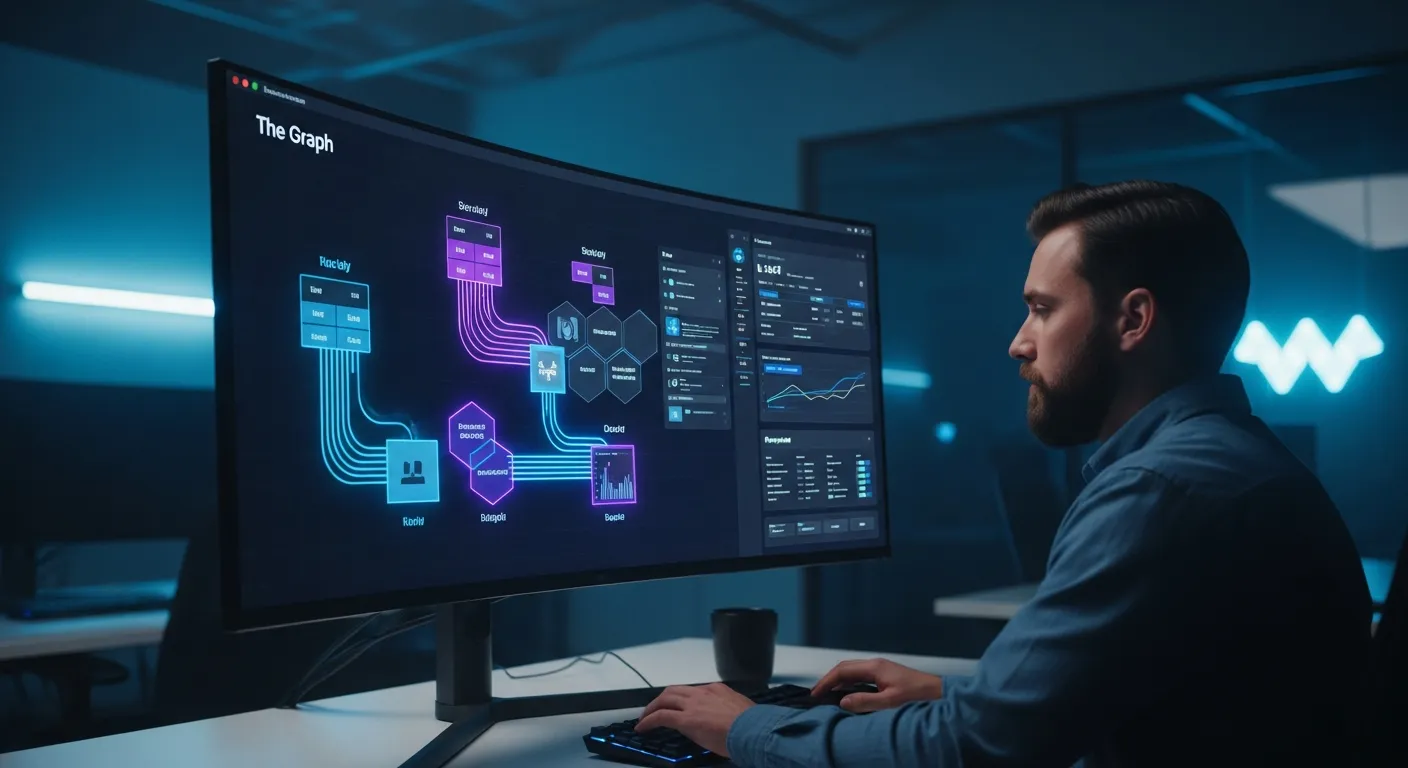
Before looking at price targets, you need to grasp why The Graph exists. Blockchains are incredible at storing data securely, but they are terrible at letting developers retrieve that data quickly. If you want to build a decentralized application (dApp) that shows a user their transaction history, reading directly from the blockchain is painfully slow and inefficient. This is where The Graph steps in. It organizes blockchain data into open APIs called subgraphs. These subgraphs allow developers to query data instantly.
Think of it as the plumbing of the decentralized internet. You don’t see it, but you notice immediately when it stops working. Major DeFi protocols like Uniswap, Synthetix, and Aave rely on this infrastructure to function. When you interact with these platforms, The Graph is often working in the background to serve you the data you see on your screen. The GRT token itself is not just a speculative asset: it is a work utility token. Indexers, Curators, and Delegators use GRT to secure the network and process queries. This economic model creates a direct link between the usage of the network and the demand for the token. As more dApps move to the decentralized mainnet, the demand for query processing grows, which theoretically creates buying pressure for GRT.
GRT Market Performance and Historical Analysis
To understand where we are going in 2026, we have to look at where we came from. The Graph has had a volatile history, typical of assets that launched during the explosive 2020-2021 cycle. After hitting its all-time high of nearly three dollars in early 2021, it spent a significant amount of time in a deep correction, mirroring the broader market downturns of 2022 and 2023. But, price action tells a story of accumulation.
Price Movements Through 2025
Looking back at last year, 2025 was a pivotal time for GRT. We saw a distinct shift in market structure. The token finally broke out of its multi-year accumulation range as the broader crypto market benefited from the post-halving liquidity cycle. Throughout 2025, GRT managed to reclaim key levels that had previously acted as stubborn resistance. We saw it decouple slightly from pure Bitcoin dominance, reacting more sharply to news about Ethereum upgrades and Layer 2 adoption. This suggests that the market finally began pricing GRT based on its own merit and network growth rather than just macro sentiment.
Current Support and Resistance Levels in Early 2026
Now, in January 2026, the chart presents a clear picture. We are currently sitting above a significant support band established during the Q4 2025 consolidation. This level is crucial for bulls to defend to maintain the upward structure. On the upside, there is a heavy resistance block that dates back to the mid-bull run levels of the previous cycle. You should watch these zones closely. If the price holds the current support, it confirms that the breakout from 2025 was valid. If it fails, we could see a retest of lower liquidity zones before any further expansion.
Short-Term Forecast: What to Expect in 2026
The year 2026 is shaping up to be a year of maturity for the asset class. Volatility is still present, but the wild swings of the early days are dampening as institutional money stabilizes the order books. For GRT, this year will likely depend on the continued migration of subgraphs to the decentralized network.
Bullish Scenario for Q1 and Q2
In a bullish case, the first half of 2026 could see GRT aggressively testing higher valuations. If the Ethereum ecosystem continues to expand and Layer 2 solutions like Arbitrum and Optimism see increased throughput, the demand for indexing services will rise naturally. You could expect GRT to target the one-dollar mark if the total crypto market cap trends upward. This psychological barrier has always been a magnet for traders. A break above that level early in the year would signal a strong continuation trend, likely driven by a combination of speculative interest and tangible increases in query fee revenue.
Potential Bearish Corrections and Consolidation
But, you must remain realistic. Markets do not go up in a straight line. There is a strong possibility of a corrective phase, especially if the broader macroeconomic environment tightens or if regulatory scrutiny on DeFi infrastructure increases. In this bearish scenario, GRT might spend a large portion of 2026 ranging between its current price and lower support levels. This consolidation would not necessarily be bad: it often serves to shake out weak hands and build a stronger foundation for the next leg up. You should be prepared for choppy price action where the token grinds sideways, testing your patience as an investor.
Long-Term Outlook: 2027 to 2030
Forecasting beyond a year in crypto is difficult, but looking at the trajectory of Web3 adoption gives us some clues. By 2027 and moving toward 2030, the infrastructure layer will likely be settled. The winners of the “middleware” wars will be established, and The Graph is currently the frontrunner to be the standard data layer for the decentralized web.
Adoption Drivers for Future Growth
Several factors will drive price appreciation over this period. First is the integration of AI with blockchain data. AI agents need clean, structured data to operate, and subgraphs are the perfect delivery mechanism for this. If The Graph positions itself as the data source for decentralized AI, the valuation model changes completely. Second is the complete sunsetting of the hosted service, forcing all meaningful dApps to use the decentralized network and pay in GRT. This transition shifts the token economics from speculative to demand-driven. You should also consider the expansion to non-EVM chains. If The Graph successfully indexes the majority of the top blockchains, it becomes a universal standard, significantly increasing its total addressable market.
Estimated Price Targets for 2030
Taking these drivers into account, the 2030 outlook is optimistic. If Web3 achieves mass adoption, GRT could arguably revisit and surpass its all-time high of nearly three dollars. In a highly aggressive scenario where blockchain data becomes as ubiquitous as cloud data is today, seeing GRT trade between five and seven dollars is not out of the realm of possibility. This assumes that the tokenomics continue to favor value accrual and that the network effects become insurmountable for competitors. But, a more conservative estimate would place the token in the two to four-dollar range, representing steady, utility-backed growth rather than a hype-fueled explosion.
Fundamental Factors Influencing GRT Valuation
When you strip away the charts and the noise, the value of GRT comes down to two main things: how much the network is used and how attractive it is to participate in the ecosystem. You cannot just look at the price: you have to look at the health of the protocol.
Network Usage and Query Fee Volume
The most important metric you should track is query fee volume. This is the revenue generated by the network. For a long time, this number was low because the hosted service was free. Now that the decentralized network is the primary focus, this figure must grow. If dApps are paying real money to retrieve data, it proves the product has value. A rising trend in query fees is the strongest bullish signal you can find because it represents organic demand that exists regardless of market sentiment.
Institutional Adoption and Indexing Rewards
The supply side is equally important. Institutional investors and large infrastructure providers run Indexer nodes to earn rewards. The attractiveness of these rewards determines the security and stability of the network. If the return on investment for Indexers drops too low, they might shut down nodes, weakening the system. Conversely, if the rewards are attractive, it locks up more GRT supply and increases security. You need to monitor the staking ratio, the percentage of total GRT locked in the protocol. A high staking ratio indicates that large holders are confident in the long-term viability of the project and are willing to lock their capital to earn yield.
Key Risks and Challenges for Investors
No investment is without risk, and you would be wise to consider the downsides before allocating capital. The biggest threat to The Graph is the emergence of centralized competitors or alternative decentralized indexing solutions that are faster or cheaper. Technology moves fast, and what is the standard today could be obsolete in three years. There is also the risk of protocol complexity. The Graph is difficult for the average user to understand, which limits retail enthusiasm compared to simpler tokens. Also, you have to watch the token inflation. While there are burn mechanisms in place, the supply of GRT is not fixed like Bitcoin. If the burn rate from query fees does not outpace the inflation from indexing rewards, the token value could be diluted over time. Finally, regulatory uncertainty remains a cloud over all utility tokens. If regulators decide that the Indexing and Delegating roles constitute a security offering, it could hamper growth in key markets like the United States.
Conclusion
The Graph represents a bet on the functional future of the blockchain industry. If you believe that dApps will replace centralized applications and that data transparency is the way forward, then GRT makes a compelling case for your portfolio in 2026. The transition from a speculative asset to a utility-driven commodity is underway. The price predictions for 2026, 2027, and 2030 show a path to significant upside, but that path depends entirely on adoption. We are past the stage of whitepapers and promises: now, the network must deliver. For the serious investor, the strategy remains the same: watch the fundamentals, track the query volume, and ignore the day-to-day noise. The infrastructure of the future is being built right now, and The Graph is laying the foundation.
Frequently Asked Questions
What is the GRT price prediction for 2026?
In a bullish scenario for 2026, the GRT price prediction targets the $1.00 psychological mark, driven by the expansion of the Ethereum ecosystem and Layer 2 adoption. However, if the market faces bearish pressure, the token may consolidate between current levels and lower support zones while the network matures.
Can The Graph (GRT) reach $5 or more by 2030?
Yes, in a highly aggressive long-term outlook, GRT could trade between $5 and $7 by 2030. This prediction assumes Web3 achieves mass adoption, The Graph becomes the standard for decentralized AI data, and network effects become insurmountable. A more conservative estimate places the token in the $2 to $4 range.
How do I stake GRT to earn rewards?
To stake GRT, you generally participate as a Delegator. You can transfer your tokens to a compatible Web3 wallet (like MetaMask) and delegate them to an Indexer through The Graph Explorer. This allows you to earn a share of query fees and indexing rewards without needing to run complex node hardware yourself.
What fundamental factors drive the value of The Graph?
The value of GRT is primarily influenced by query fee volume—real revenue generated when dApps pay to retrieve data. Additionally, the staking ratio is critical; high participation from Indexers and Delegators locks up supply and signals institutional confidence in the protocol’s long-term security and viability.
Is The Graph compatible with blockchains other than Ethereum?
Yes, The Graph is designed to be multi-chain. While it originated on Ethereum, it supports various Layer 2 networks like Arbitrum and Optimism. Expanding to index non-EVM (Ethereum Virtual Machine) chains is a major goal, which would significantly increase its total addressable market and utility across the crypto ecosystem.
