
Boxabl Stock Price Prediction 2026: IPO & Valuation
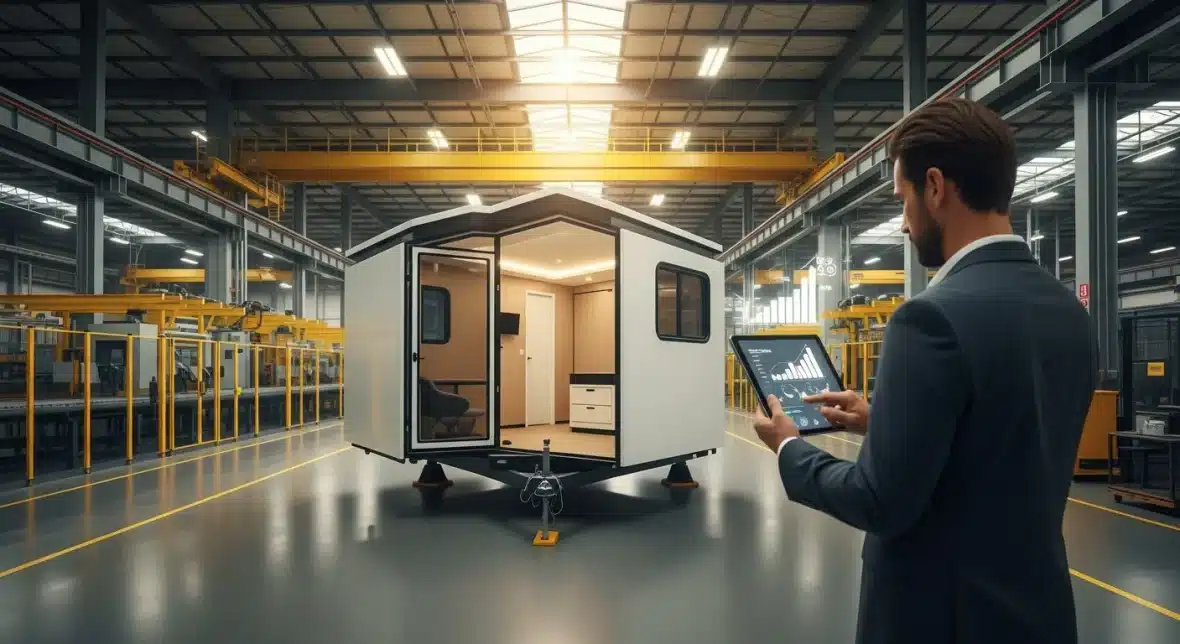
The housing market is desperate for a solution to rising costs and labor shortages, and Boxabl has positioned itself as the most visible disruptor in this space. If you have been following the private markets, you know the buzz surrounding their foldable Casita units is substantial. But, translating hype into a concrete Boxabl stock price prediction for 2026 requires looking past the viral videos and examining the hard financial realities. As an investor, you are likely wondering if the current private valuation is sustainable or if an eventual public offering will bring a correction. This analysis looks at where the company stands today and where its share price might realistically head over the next few years as it attempts to scale manufacturing.
Key Takeaways
- A reliable Boxabl stock price prediction 2026 hinges on the company’s ability to successfully transition from boutique manufacturing to mass industrial automation.
- Current private valuations exceeding $3 billion suggest that significant future growth is already priced in, creating a high-risk environment for new investors.
- Future share value depends heavily on converting the massive interest list of over 170,000 names into a funded backlog and recognized revenue.
- An Initial Public Offering (IPO) is a plausible exit strategy by 2026, though a traditional listing is viewed as more stable than a SPAC merger.
- External factors like fluctuating interest rates and local zoning approvals will critically impact the company’s total addressable market and stock performance.
Analyzing Boxabl’s Market Position and Business Model

To understand where the stock price might go, you first have to assess the engine driving the company. Boxabl is not just selling tiny homes: they are attempting to reinvent the construction assembly line. Their core value proposition lies in the proprietary folding technology that allows a full-sized house to ship within standard logistics channels. This solves the massive shipping cost problem that has historically killed other modular housing startups. When you look at their business model, it is built entirely on the premise of mass production lowering unit costs, similar to the automotive industry.
The Casita Product and Factory Scaling
The Casita is the flagship product, a 375-square-foot accessory dwelling unit that ships for a fraction of the cost of traditional wide-load modular homes. The company currently operates out of a factory in Las Vegas, but the bull case for 2026 relies heavily on the success of their “Boxzilla” factory plans. You should note that their current valuation is priced for perfection, assuming they can transition from a boutique manufacturer to a massive industrial operation. If they cannot automate production to lower the cost of goods sold, the margins will simply not support a high stock price.
Revenue Growth and Order Backlog
Valuation is eventually tethered to revenue, and Boxabl has boasted a massive interest list, often cited as over 170,000 names. But, you must distinguish between a non-binding interest list and a funded backlog. While the company has secured meaningful contracts, including deals with the government, converting that massive waiting list into paid deliveries is the real challenge. By 2026, investors will stop rewarding them for the size of their backlog and start punishing them if those orders are not converted into recognized revenue.
Current Private Valuation vs. Future Projections
Understanding the entry point is critical for any investment. Boxabl has raised capital through Regulation Crowdfunding and Regulation A+ offerings, allowing accredited and non-accredited investors to buy in early. These rounds have pushed the company’s paper valuation to levels that some analysts find alarming, exceeding $3 billion at various points. This is a rich valuation for a company at its current revenue stage, and it implies that a significant amount of future growth is already baked into the price.
Historical Funding Rounds and Share Price Evolution
In early funding rounds, shares were available for pennies, but subsequent raises saw the price per share climb significantly, often hovering around the $0.70 to $0.80 mark depending on the specific terms and splits. If you bought in during the early seed stages, you are sitting on substantial unrealized gains. But, new investors entering now face a much higher risk profile. The price has escalated based on potential rather than audited profitability, which creates a precarious situation if growth slows down.
Implied Valuation Metrics for 2026
For the stock price to appreciate by 2026, Boxabl needs to grow into its $3 billion-plus valuation. In the public markets, hardware and manufacturing companies typically trade at lower revenue multiples than software companies. If Boxabl trades at a generous 5x or 10x revenue multiple in 2026, they would need to be generating hundreds of millions, if not billions, in revenue to justify a share price increase. If they are still generating under $100 million in revenue by then, you could see a significant down round or a drop in share value.
Will Boxabl IPO by 2026?
The liquidity event is what every pre-IPO investor is waiting for. You are likely holding restricted shares with no easy way to sell, and an IPO is the clearest exit strategy. By 2026, the pressure from early investors to list on a public exchange will be intense. The company has hinted at public listing ambitions, but they have correctly identified that listing too early can be disastrous. The window for a 2026 IPO looks plausible if they can stabilize their production numbers and show a clear path to profitability.
Potential Listing Scenarios: SPAC vs. Traditional IPO
A few years ago, a Special Purpose Acquisition Company (SPAC) merger would have been the obvious route for a hype-driven company like Boxabl. But, the SPAC market has cooled significantly due to regulatory scrutiny and poor performance. A traditional IPO is now the more likely and stable path. This requires rigorous auditing and transparency. If they choose a direct listing or traditional IPO, it signals confidence. If they attempt a SPAC merger in 2026, you should view that with caution, as it often implies a need for quick cash over fundamental stability.
Estimated IPO Offering Price Range
Predicting the exact IPO price is speculative, but we can look at market capitalization. If Boxabl targets a $5 billion market cap at IPO in 2026 with a similar share count to today, the share price would see a moderate upside from the current private rounds. But, if market conditions are bearish, they might be forced to list at a valuation lower than their last private round, a situation known as a “down-IPO.” This would be painful for investors who bought in at the peak of the private offering frenzy.
2026 Stock Price Forecast Scenarios
Forecasting the exact price requires mapping out three distinct futures. Since the company is not yet public, we have to model these scenarios based on execution capability and market demand. Your return on investment depends entirely on which of these realities comes to pass.
Bull Case Scenario: Mass Adoption and Expansion
In this optimistic view, the Las Vegas factories are running at full capacity, and Boxabl has successfully navigated state zoning laws to allow for easy installation. Revenue exceeds $1 billion, and the brand becomes the “Tesla of Housing.” In this scenario, the valuation could soar past $10 billion. If this happens, the stock price could easily double or triple from the current private offering levels. Momentum trading would likely carry the stock higher, driven by retail investor enthusiasm and the continued novelty of the product.
Base Case Scenario: Steady Growth
Here, Boxabl survives and grows but faces the typical friction of construction. They produce homes, but not at the lightning speed promised. Revenue grows steadily to the $300-$500 million range. In this case, the valuation might stay flat or increase marginally. The stock price in 2026 would reflect a legitimate business but would strip away the “tech company” premium. You would see a share price hovering near or slightly above the current Regulation A+ buy-in prices, offering little return for the years of illiquidity.
Bear Case Scenario: Production Bottlenecks
The risks here are real. If the company burns through its cash pile without achieving positive cash flow, they will face a liquidity crisis. Production delays, quality control issues, or a failure to secure a massive second factory could crash the valuation. In this scenario, the stock price could plummet well below the current private levels, possibly resulting in a loss of principal for late-stage private investors. The secondary market for these shares would dry up, leaving you with an asset you cannot sell.
Key Drivers of Future Share Value
Beyond the factory walls, external economic forces will dictate Boxabl’s fate. You cannot analyze this stock in a vacuum. The housing market is sensitive, and Boxabl is eventually selling a real estate product, even if it looks like technology.
Impact of Interest Rates on Housing Demand
Interest rates define affordability. If rates remain high through 2026, traditional mortgages become expensive, which paradoxically could help Boxabl. Their lower price point makes them an attractive cash buy or easier to finance than a $500,000 stick-built home. But, high rates also make it more expensive for Boxabl to service their own debt and fund expansion. You need to watch the Federal Reserve’s policy as closely as you watch Boxabl’s press releases.
Regulatory Challenges and Zoning Approvals
This is the silent killer of housing startups. You might have the best factory in the world, but if a local municipality refuses to zone the Casita as a permanent residence, the total addressable market shrinks. Success in 2026 depends on Boxabl winning the lobbying war to standardize modular housing codes federally or state-by-state. If they fail here, the product remains a niche accessory rather than a housing solution, capping the stock price.
Investment Risks and Considerations for Pre-IPO Buyers
Investing in pre-IPO stock is not for the faint of heart. You are locking up your capital for an indefinite period with zero guarantee of a liquid exit. The biggest risk you face is dilution. If Boxabl runs low on cash and raises more money at a lower valuation, your percentage ownership and the value of your shares drop. Besides, information opacity is a serious issue. Unlike public companies, private firms have fewer reporting requirements. You might not know things are going wrong until it is too late to react. Proceed with caution and ensure this speculative play fits your risk tolerance.
Conclusion
Boxabl represents one of the most exciting manufacturing experiments of the decade, but a great product does not always equal a great stock. The prediction for Boxabl’s stock price in 2026 ranges from a breakout success story to a cautionary tale of overvaluation. If they execute their factory expansion and navigate the zoning minefield, the upside is evident. But, the current valuation leaves little room for error. As an investor, you should view this not as a guaranteed win, but as a high-risk venture capital style bet on the future of construction.
Frequently Asked Questions
What is the Boxabl stock price prediction 2026?
The Boxabl stock price prediction for 2026 depends on execution. In a bull scenario where revenue exceeds $1 billion, shares could double or triple from current private levels ($0.70–$0.80). However, a bear scenario with production bottlenecks could see the value drop significantly below entry prices.
How can I buy Boxabl stock before the IPO?
Since Boxabl is private, you cannot buy shares on public exchanges like the NYSE. Investors typically purchase stock during active Regulation A+ or Crowdfunding rounds on equity crowdfunding platforms, or through secondary marketplaces for private securities if available.
When is the Boxabl IPO expected to occur?
A Boxabl IPO is plausible by 2026 as pressure for investor liquidity grows. The company is expected to favor a traditional IPO over a SPAC merger, provided they can stabilize factory production and demonstrate a clear path to profitability.
What is the stock ticker symbol for Boxabl?
Boxabl does not currently have a stock ticker symbol because it is not yet publicly traded. If the company successfully lists on a public exchange in 2026, they will register a ticker symbol (such as BOXA) at that time.
What are the main risks impacting Boxabl’s future valuation?
The primary risks include local zoning laws that may restrict where Casitas can be installed, potential manufacturing bottlenecks, and the challenge of converting their large interest list into paid revenue. Additionally, high interest rates could impact the company’s ability to service debt.
