
Rivian Stock Forecast 2026-2030: Growth & Valuation
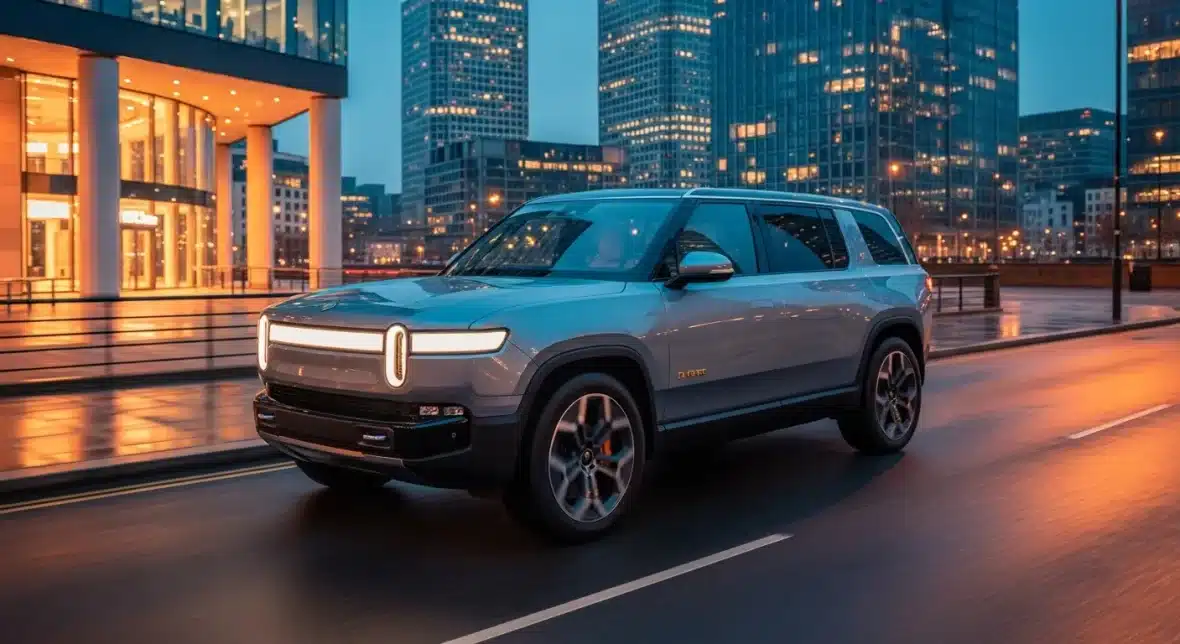
Investing in the electric vehicle sector has felt like riding a rollercoaster in the dark for the last few years. You have likely watched Rivian Automotive (RIVN) navigate the treacherous transition from a hype-fueled IPO to the harsh reality of manufacturing logistics and cash burn. As we look toward the latter half of this decade, the narrative shifts from simple survival to scalable profitability. The period between 2026 and 2030 represents the critical maturation phase for the company, where the promise of their technology must finally translate into sustainable shareholder value.
For you as an investor, understanding this timeline is essential because the Rivian of 2025 will look vastly different from the Rivian of 2030. We are moving past the early adopter phase into mass market penetration, a shift that brings entirely new financial dynamics. The forecast for Rivian’s stock price over the next five years hinges on specific execution milestones, particularly the success of the R2 platform and the ability to manage capital expenditures without diluting your equity into oblivion. This analysis cuts through the noise to provide a serious, grounded projection of where RIVN is headed.
Key Takeaways
- The success of the R2 platform launch in 2026 serves as the central driver for a positive Rivian stock price prediction 2026-2030 by unlocking mass-market demand.
- Investors should expect the most significant stock appreciation between 2027 and 2028 as the Georgia facility ramps up production and revenue growth accelerates.
- Achieving positive gross margins per vehicle remains the critical financial metric for transitioning RIVN from a volatile speculation to a stable value play.
- Strategic partnerships with Volkswagen and expanded commercial fleet sales significantly de-risk the investment by strengthening the balance sheet against cash burn.
- Long-term forecasts suggest that successful global expansion into Europe and Asia by 2029 could drive valuation to new all-time highs.
Rivian’s Market Position Entering 2026
By the time we reach the start of 2026, you should expect Rivian to have shed its label as a strictly luxury truck manufacturer. The company is positioning itself to enter this year having stabilized its initial production woes and established a brand identity that rivals legacy automakers in terms of loyalty and satisfaction. But, the financial footing will likely remain tight. The company has spent the previous years bridging the gap between its flagship R1 vehicles and the more affordable upcoming models. Your assessment of the stock at this juncture relies heavily on how effectively they have preserved cash reserves leading up to this pivotal year.
Production Capacity and the Georgia Facility
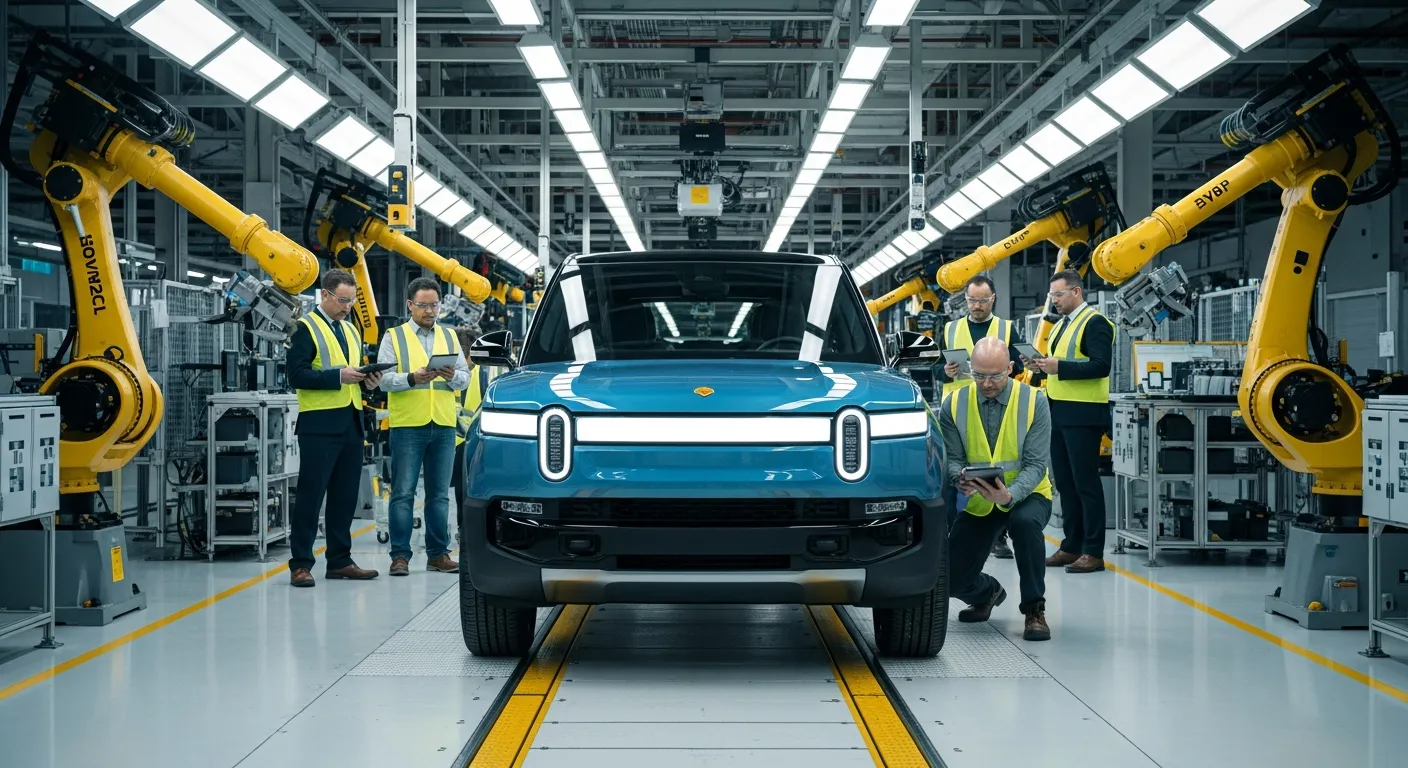
The story of Rivian’s growth has always been constrained by how many vehicles they can physically build. Entering 2026, the focus shifts intently to the status of the manufacturing plant in Georgia. While the Normal, Illinois facility has undergone retooling to squeeze out efficiency, it has a hard ceiling on output. You have seen delays in the Georgia build-out as a capital preservation strategy, but by 2026, construction and tooling must be well underway or nearing completion for the growth thesis to hold water. If this facility is not coming online to support the volume needed for mass-market vehicles, the stock will face severe headwinds. The market will punish any further hesitation here, as capacity expansion is the only route to justify a higher valuation multiple.
The R2 and R3 Vehicle Launch Impact
The R2 platform is the single most important variable in your valuation model for this period. Launching in the first half of 2026, this mid-sized SUV targets the heart of the market, competing directly with the Tesla Model Y. If the R2 launch echoes the production hell of the R1, the stock will suffer. But, if Rivian applies the hard-learned lessons from their early years to achieve a smoother ramp-up, this vehicle changes the revenue profile entirely. Following closely, the R3 crossover represents the next step in accessibility. These vehicles move Rivian from a niche player selling $80,000 trucks to a mass-market competitor. The volume potential here is what institutional investors are betting on, and successful deliveries in 2026 will be the catalyst for the stock’s upward trajectory.
Year-by-Year Stock Forecast 2026-2030
Forecasting the specific price action requires analyzing the operational maturity expected each year. You should view this five-year block not as a straight line up, but as a series of stair-step operational victories that slowly de-risk the investment. The volatility will likely decrease as the company proves its unit economics, but the potential for growth remains significant if execution aligns with strategy.
2026 Outlook: Operational Efficiency and Margins
In 2026, your attention must be on gross margins. This is the year Rivian has guided toward achieving a modest gross profit per vehicle. The stock price will likely remain volatile in the first half of the year as the market digests the costs associated with the R2 launch. You should not expect an explosion in the share price immediately: rather, look for stability. If the company ends 2026 proving they can sell the R2 at a positive gross margin, the stock will begin to attract more conservative institutional capital, setting a higher floor for the price.
2027-2028 Projection: Scaling Mass Market Adoption
As we move into 2027 and 2028, the narrative shifts from “can they build it?” to “how many can they sell?” This is where the Georgia facility’s output becomes visible in the earnings reports. You can anticipate revenue growth to accelerate significantly during these years as R2 production hits its stride. This period is likely where the stock sees its most aggressive appreciation. The market tends to reward the rapid scaling phase of a successful product line. If Rivian captures even a modest slice of the mid-size SUV market share from competitors, the valuation could double from 2026 levels during this window. The risk here is demand: if the economy falters or interest rates remain prohibitive, inventory buildup could damage the stock price.
2029-2030 Long-Term Forecast: Global Expansion
By 2029 and 2030, Rivian should be operating as a mature global automaker. The domestic market will likely be nearing saturation for their existing lineup, forcing the company to look abroad for growth. Your investment thesis at this stage depends on their success in Europe and potentially Asia. A successful international expansion could drive the stock to new all-time highs, potentially mirroring the trajectory seen by other successful EV majors a decade prior. But, if they remain largely a North American player, the stock will likely trade at a lower multiple, similar to legacy domestic automakers.
Fundamental Drivers of RIVN Stock Value
Price targets do not exist in a vacuum. They are the result of fundamental business drivers that you need to monitor closely. While production numbers grab headlines, the underlying mechanics of Rivian’s business partnerships and the broader economic environment are what eventually dictate long-term shareholder returns.
Commercial Partnerships and the Amazon Deal
The relationship with Amazon provided Rivian with a vital floor during its early years, but moving forward, you should look for the diversification of their commercial business. The end of the exclusivity clause with Amazon was a positive step, allowing Rivian to sell its Electric Delivery Van (EDV) to other fleets. Between 2026 and 2030, significant fleet orders from logistics companies beyond Amazon will be a major driver of recurring revenue and service contracts. Besides, the joint venture and investment from Volkswagen Group provide a critical capital lifeline and software expertise. This partnership validates Rivian’s technology stack and significantly lowers the bankruptcy risk that has plagued the stock in the past. As these partnerships mature, they provide a buffer against consumer demand fluctuations.
EV Market Competition and Regulatory Environment
You cannot ignore the competitive density of the market. By 2026, virtually every legacy automaker will have a matured EV lineup, and Chinese manufacturers may have found ways to penetrate Western markets. Rivian’s ability to maintain pricing power in this environment is key. If a price war ensues, margins will compress, and the stock will suffer. Also, the regulatory environment about tax credits and emissions standards will continue to influence buyer behavior. Your long-term hold depends on Rivian maintaining a premium brand cachet that insulates it somewhat from the race to the bottom on pricing.
Investment Scenarios: Bull, Bear, and Base Case Targets
To manage your risk, you should weigh three distinct scenarios for the 2026-2030 period. In the Bull Case, the R2 launch is flawless, the Volkswagen partnership leads to best-in-class software monetization, and the Georgia plant ramps up ahead of schedule. Under this scenario, Rivian achieves profitability by late 2026 and joins the S&P 500 by 2028. The stock would likely trade at a premium technology multiple, potentially reclaiming and surpassing its post-IPO highs as it dominates the adventure-lifestyle segment of the EV market.
The Base Case assumes a messier but eventually successful path. Here, you see delays in the R2 ramp and ongoing capital raises that dilute early shareholders. Profitability arrives but later than hoped, perhaps in 2027. In this scenario, the stock appreciates steadily but acts more like a traditional auto stock than a high-growth tech play. It outperforms the broader market but does not deliver moonshot returns.
In the Bear Case, you must consider the possibility that the capital intensity of building the Georgia plant breaks the balance sheet. If demand for the R2 is softer than expected due to competition from cheaper alternatives, Rivian could be forced into a distressed merger or significant restructuring. In this scenario, the stock price languishes in single digits or low double digits, destroying long-term value for investors who bought in during the mid-2020s.
Potential Risks and Challenges for Investors
Even with a sound strategy, the risks facing your investment are substantial. The primary concern remains cash burn. Automotive manufacturing is notoriously capital intensive, and Rivian has historically burned through cash at an alarming rate. While the Volkswagen deal injects liquidity, building factories and launching two new vehicle platforms costs billions. If they require further equity raises between 2026 and 2030, your ownership stake gets diluted. You must also watch the macroeconomic environment. High interest rates are kryptonite for auto stocks because they increase the cost of financing for customers. If we enter a prolonged period of expensive capital, Rivian’s growth targets will be mathematically impossible to hit. Finally, execution risk remains high. Scaling manufacturing is difficult: scaling it while maintaining the high build quality that Rivian is known for is even harder.
Conclusion
Looking at the trajectory for 2026 through 2030, Rivian represents a classic high-risk, high-reward proposition that is slowly transitioning into a value play. You are no longer betting on a concept: you are betting on the execution of a clearly defined roadmap. The R2 and R3 vehicles are the bridge to the future. If Rivian crosses that bridge successfully in 2026 and 2027, the stock has the potential to become a cornerstone of a growth portfolio. But, the path is narrow. For the serious investor, the strategy should be one of cautious accumulation, watching the gross margin reports and production milestones closely. The days of blind hype are over: the era of operational scrutiny is here.
Frequently Asked Questions
What is the Rivian stock price prediction for 2026-2030?
The Rivian stock price prediction for this period depends on operational maturity. Analysts view 2026 as a year of stabilization focused on margins, while 2027–2028 could see aggressive appreciation as the R2 platform scales. Long-term value hinges on the Georgia facility’s success and global expansion by 2030.
How will the R2 platform launch affect RIVN stock value?
The R2 launch in the first half of 2026 is the most critical variable for RIVN stock. A smooth ramp-up that achieves positive unit economics will likely attract institutional investors and drive the stock up, whereas production delays similar to the R1 launch could result in significant valuation volatility.
When is Rivian expected to become profitable?
Rivian aims to achieve a modest gross profit per vehicle in 2026. In a bullish scenario, net profitability could arrive by late 2026, though a base case suggests 2027. Achieving this milestone is essential for shifting the stock from a speculative bet to a sustainable growth investment.
What risks should investors watch regarding Rivian stock?
The primary risks to the Rivian stock price prediction include cash burn and potential equity dilution if further capital raises are needed. Additionally, high interest rates can dampen consumer demand, and intense competition from legacy automakers and Tesla could compress margins if a price war ensues.
Is Rivian a better buy than Tesla for the next five years?
Rivian offers higher growth potential (high risk/high reward) as it transitions from a niche to a mass-market player with the R2 and R3. Conversely, Tesla is a more mature, lower-risk holding. Investors seeking aggressive growth often look to Rivian, while those seeking established dominance prefer Tesla.
